You’re not failing. Separation anxiety is just hard.
I’ve helped over 100,000 dog guardians, and I’d love to help you. Whether you’re just starting out or feeling stuck, there’s a path forward.

0
families helped so far
0
helping dogs with separation anxiety
0
separation anxiety podcast
You’ve tried everything. None of it worked.
Thunder vests. Calming supplements. Crate training. Desensitisation exercises from YouTube videos. Maybe you even hired a trainer who told you to “just leave them” or “they’ll get used to it.”
None of it worked because it doesn’t address what’s actually going on with your dog.
Your dog’s not bad. They’re not broken. They’re scared.
Separation anxiety is a fear of being alone — and like any fear, your dog can learn to get past it.
You start with tiny absences, and build up slowly at your dog’s pace. Over time, they learn that being alone is safe.
The good news? You don’t have to figure it out alone.
I wrote a book that’s helped 100,000 families figure this out.
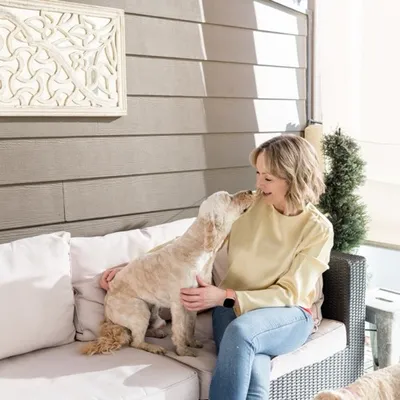
Hi, I’m Julie.
I’ve spent 15 years helping dogs with separation anxiety — including my own dog Percy, who couldn’t be left alone for a minute when I first got him.
I’ve written the books, recorded hundreds of podcast episodes, and built an app that’s helped 9,000 dogs learn to be comfortable home alone.
Quick answers for overwhelmed days
How do I know if this is separation anxiety?
The key signs: your dog shows distress only when you’re absent, it starts within 30 minutes of you leaving, and includes panting, pacing, barking, destructive behavior, or toileting that doesn’t happen when you’re home. If they’re fine when a dog-sitter is there, that’s a strong signal.
What should I do first today?
Stop leaving your dog alone for longer than they can cope with — even once. Every bad absence sets training back. Then start absences so short they can’t possibly fail: 10 seconds, then 20, then 30. Build from there. The book or podcast will walk you through the full method.
What if I feel stuck or keep second-guessing myself?
That’s the most common place people get stuck — not technique, but confidence. The program gives you a certified trainer reviewing your sessions and telling you exactly what to do next. If you’ve been at it alone for a while, that structure can be the thing that finally makes it click.
What owners say
They got their lives back.
Separation Anxiety Heroes was an absolute life changer for us. Milo is settled for an hour to an hour and a half consistently when I’m out, and I don’t need to worry. If we ever had a regression, I wouldn’t hesitate to come back.
The Be Right Back book and app was a godsend. We started out doing Door is a Bore and now we can leave our pup home alone for almost 5 hours. The journey is by no means easy, but there is hope if you can commit to the training plan.
The first time she fell asleep within 5 minutes of us leaving I nearly cried from relief. Being able to work in small increments on a set plan was the key I had not found anywhere prior to BRB.
I adopted my dog Dale about 6 months ago. He struggled with separation anxiety immediately. Dale has aced up to 4 hours now with the help of this app and meds. Thanks Julie and team!
· · ·
You don’t have to figure this out alone.
Whether you’re just starting to understand what’s going on, or you’ve been stuck for months — there’s a path forward. Let me help you find it.
Start training today.