
The Complete Guide
Dog Separation Anxiety: Everything You Need to Know
From someone who has spent 15 years on this one topic — and helped over 100,000 guardians along the way.

What is dog separation anxiety?
Separation anxiety is a panic disorder. Not bad behavior. Not boredom. Not your dog being stubborn, spiteful, or trying to punish you for leaving.
When a dog with separation anxiety is left alone — or even senses that you’re about to leave — they experience genuine terror. The same kind of overwhelming, irrational fear that a person with a phobia feels. They can’t reason their way out of it. They can’t “just relax.” Their nervous system is in full flight-or-fight mode, and they have no way to turn it off.
This is important to understand, because it changes everything about how you respond. If your dog is being naughty, you correct the behavior. But if your dog is panicking? You can’t punish panic away. You have to treat the fear itself.
Separation anxiety is one of the most common behavioral issues in dogs. You are not alone in dealing with this, and it is not your fault.
What separation anxiety is not
Not every dog who struggles when left alone has separation anxiety. It’s worth understanding the difference:
- Boredom — A bored dog might chew a shoe or raid the trash. They’re entertaining themselves. A dog with separation anxiety isn’t having fun — they’re in distress. The destruction isn’t recreational, it’s desperate.
- Demand behavior — Some dogs bark when you leave because they’ve learned it brings you back. That’s frustration, not panic. It looks different on camera: the dog is annoyed, not terrified.
- Incomplete house training — Toileting in the house can be a sign of separation anxiety, but it can also just mean the dog hasn’t fully learned the rules yet. Context matters.
- Normal puppy distress — Young puppies cry when left alone because they’re brand new to the world. That’s not separation anxiety — that’s a puppy being a puppy. It usually resolves quickly.
If you’re unsure, set up a camera and watch what happens when you leave. That footage tells you everything.
What does separation anxiety look like?
Separation anxiety shows up differently in every dog, but the common thread is distress that begins when they’re left alone (or sometimes even when they sense you’re about to leave). Here’s what to look for:
The obvious signs
- Barking, howling, or whining — Persistent, often starting within seconds of you leaving. This isn’t a quick bark at a squirrel. It’s continuous, distressed vocalization that can go on for hours.
- Destructive behavior — Particularly around exit points: scratching at doors, chewing window frames, destroying crates. Dogs have broken teeth, torn nails, and injured themselves trying to get out.
- Toileting in the house — A house-trained dog who only has accidents when left alone. This is a stress response, not a training failure.
- Escape attempts — Jumping through windows, digging under fences, breaking out of crates. These can be genuinely dangerous.
The subtle signs
These are the ones most people miss:
- Pacing — Walking the same path over and over, unable to settle.
- Panting and drooling — When it’s not hot and there’s no physical reason for it.
- Not eating — You leave a stuffed Kong or treats, and they’re untouched when you get home. A panicking dog can’t eat.
- Lip licking, yawning, shaking off — Stress signals that most people don’t recognize.
- Becoming very still — Some dogs don’t bark or destroy. They just freeze and shut down. This is still distress — it’s just quiet distress.
The pre-departure signs
Many dogs start showing anxiety before you’ve even left. They learn your routine — picking up keys, putting on shoes, grabbing your bag — and the panic starts there. You might notice your dog following you from room to room, becoming clingy, trembling, or positioning themselves by the door to block your exit.
Here’s the thing most guardians don’t realize: you can’t know what your dog does when you’re gone unless you watch. A camera is essential. I can’t stress this enough. Many of the families I work with had no idea how much their dog was struggling until they set up a camera and saw it for themselves. It’s often the moment everything changes.
What causes separation anxiety?
This is where it gets frustrating: sometimes there’s a clear trigger, and sometimes there isn’t. Both are normal.
Common triggers
- A change in routine — Going back to the office after working from home. A new work schedule. A partner moving out. Dogs are creatures of habit, and when the routine shifts, some dogs can’t cope with suddenly being alone.
- Moving to a new home — Everything that was familiar is gone. New smells, new sounds, new layout. For a dog who was already on the edge, this can tip them over.
- Loss of a family member — Human or animal. When someone who was always there suddenly isn’t, some dogs fall apart.
- A frightening experience while alone — A thunderstorm, fireworks, a break-in, construction noise. One bad experience can create a lasting association between being alone and being terrified.
- Rehoming — Dogs who have been surrendered and adopted often develop separation anxiety. They’ve already lost one family. They’re not sure it won’t happen again.
- Pandemic puppies — Dogs acquired during lockdowns who spent their entire early life with their owners at home 24/7. When normal life resumed, these dogs had never learned that being alone was okay.
And sometimes, there’s no trigger at all
Some dogs develop separation anxiety with no obvious cause. They’ve had a stable life, nothing traumatic has happened, and one day they can’t be left alone. Research suggests there may be a genetic component — some dogs are simply more predisposed to anxiety than others.
What does not cause separation anxiety
Let me be very clear about this: you did not cause your dog’s separation anxiety by loving them too much.
Letting your dog sleep on the bed doesn’t cause separation anxiety. Cuddling your dog doesn’t cause it. Letting them follow you around the house doesn’t cause it. “Spoiling” your dog doesn’t cause it. This is outdated advice based on dominance theory, and it has been thoroughly debunked.
Separation anxiety is a fear response. It’s neurological. You wouldn’t blame a person for developing a phobia because they were “too loved,” and the same applies here.
What about spaying or neutering?
If your dog already has separation anxiety, you may be wondering whether spaying or neutering will help, or make it worse. I get asked this often enough that I dug into the research and wrote it up separately — the short version is that the evidence linking neuter status to separation anxiety specifically is too thin and too old to lean on either way. See what the research actually says for the full picture, including the medical trade-offs that are well documented.

The myths that make everything worse
Bad advice is everywhere. Friends, family, the internet, even some trainers will tell you things that not only don’t help — they actively make separation anxiety worse. After 15 years, I’ve heard them all.
“Just leave them. They’ll get used to it.”
This is the most damaging piece of advice out there. The idea that if you just force your dog to be alone, they’ll eventually accept it. This is called flooding, and it’s the equivalent of locking a person with a spider phobia in a room full of spiders and saying, “You’ll get over it.”
Some dogs don’t “get over it.” They get worse. Every time your dog has a full panic experience, it reinforces the fear. The panic doesn’t weaken — it deepens. And you risk your dog hurting themselves in the process.
“Crate training will fix it.”
Crates are useful tools for many things, but they do not treat separation anxiety. A crate doesn’t address the underlying panic — it just contains the dog while they’re panicking. Many dogs with separation anxiety are worse in crates: they feel trapped, they can’t pace (which is a coping mechanism), and they may injure themselves trying to escape.
Some dogs do feel safer in their crate — if yours is one of them, that’s fine. But a crate is not a treatment for separation anxiety.
“It’s because you let them on the furniture.”
This comes from the old “dominance” school of dog training — the idea that your dog has separation anxiety because they think they’re the pack leader and you need to establish yourself as the alpha. This has been thoroughly disproven by modern behavioral science. Dogs aren’t trying to dominate you. They’re scared.
Where your dog sleeps has nothing to do with whether they panic when you leave.
“Get a second dog.”
This one sounds logical. If the dog is lonely, get them a friend, right? But in most cases, separation anxiety isn’t about being alone — it’s about you being gone. Your dog’s attachment is to you specifically. A second dog doesn’t replace you, and now you have two dogs to manage (and potentially two dogs with anxiety, because stress can be contagious).
There are rare cases where a companion dog helps. But it’s the exception, not the rule — and getting a second dog is a big commitment to make on a gamble.
“Don’t make a fuss when you leave or come home.”
This is one of those pieces of advice that sounds reasonable but misses the point. Yes, wildly dramatic departures aren’t helpful. But telling people to ignore their dog before leaving and pretend they don’t exist when they get home? That doesn’t treat separation anxiety. The dog isn’t panicking because you said goodbye too enthusiastically. They’re panicking because you’re gone.
A calm goodbye is fine. Saying “see you later, buddy” is fine. The departure ritual isn’t the problem.
How do you actually fix it?
The gold-standard treatment for separation anxiety is systematic desensitization — a structured, gradual process that teaches your dog that being alone is safe. It’s the same evidence-based approach used to treat phobias in humans, adapted for dogs. And it works.
How it works
The principle is simple: you start at a level your dog can handle without panicking, and you gradually increase from there. If your dog can’t handle you being out of sight for more than five seconds, you start at five seconds. Then ten. Then twenty. Each successful repetition teaches your dog: “They left, and they came back. Nothing bad happened. I’m okay.”
Over time, five seconds becomes a minute. A minute becomes five minutes. Five minutes becomes half an hour. The dog’s nervous system learns a new response. Where there was panic, there’s now calm.
The critical rule is: never push past your dog’s threshold. If your dog panics during a session, you’ve gone too far. The whole point is to keep every absence below the level that triggers a fear response. This is why structured training plans matter — you need to know exactly how long your dog can handle, and you need to adjust based on how they’re doing.
What a training session looks like
A typical session is 15 to 30 minutes. You step out — sometimes just out of sight, sometimes out the door — for a planned duration. You come back. You do it again. Each repetition is a data point. You’re watching your dog on camera the whole time, adjusting in real time based on how they’re responding.
It’s not dramatic. It’s not exciting. It’s methodical, consistent, and it works. The families I’ve worked with — over 9,000 of them — have collectively tracked more than 1.6 million training steps through the Be Right Back app. That’s a lot of data, and it tells a clear story: this method works when people stick with it.
Management while you train
While you’re building up your dog’s alone time through training, you need to avoid leaving them alone for longer than they can handle. This is the management piece, and it’s essential.
Management means: dog sitters, daycare, taking your dog to work, asking friends to help, working from home when possible. It feels like a lot — and it is — but it’s temporary. Every unmanaged absence where your dog panics undoes some of your training progress. Think of it like protecting your investment.
Medication
For dogs with moderate to severe separation anxiety, medication can be a game-changer. I want to be direct about this because there’s so much stigma around it: medication is not cheating. It’s not a failure. It’s a legitimate, evidence-based tool.
What medication does is lower your dog’s baseline anxiety enough that they can actually learn from the training. Think of it this way: if your dog is so flooded with fear that they can’t process anything, even the best training plan won’t land. Medication takes the edge off so the learning can happen.
The most commonly used medications include fluoxetine (Prozac) and clomipramine, sometimes combined with situational medications like trazodone. Your veterinarian or a veterinary behaviorist can advise on what’s right for your dog. Daily medications typically take 4 to 6 weeks to reach full effect.
Medication combined with desensitization training is often the fastest path to progress, particularly for dogs who are severely affected.

How long does it take?
I’m going to give you an honest answer, because that’s more useful than a comforting one.
It depends. It depends on how severe your dog’s anxiety is, their temperament, whether medication is part of the plan, how consistent you are with training, and a dozen other variables. I can’t give you a number and promise that’s how long it will take.
What I can tell you, based on data from over 9,000 dogs who have been through this process:
- Most dogs show meaningful progress within weeks. Not “cured,” but real, visible improvement. Dogs who couldn’t handle 30 seconds reaching 5 minutes. Dogs who couldn’t handle 5 minutes reaching 20. Those early wins matter enormously — for you and for your dog.
- Some dogs take months to reach the durations you need for daily life. Getting to the point where you can go to work or run errands without worry — that’s the goal, and for some dogs it takes longer.
- The single biggest predictor of success is consistency. Guardians who train regularly — even just 15 to 20 minutes a day, most days of the week — see results. Those who train sporadically tend to stall. The method works. The variable is whether people stick with it.
I know that’s not the quick fix you were hoping for. There is no quick fix for separation anxiety — and anyone who tells you there is, is selling you something that won’t work. But there is a fix. It takes effort, it takes patience, and it takes consistency. And it works.
What about setbacks?
Setbacks are normal. I want to say that clearly because it’s the number one thing guardians ask me about. Your dog will have bad days. They’ll have days where they seem to go backward. This does not mean the training isn’t working. It does not mean you’ve ruined everything.
Here’s what our data shows: 97% of families who succeeded had setbacks along the way — 28 of them on average. After a moderate regression, 65% of dogs recover within about 14 sessions. Setbacks aren’t a sign of failure. They’re a normal part of how the brain rewires.
Separation anxiety training is not a straight line. It’s an upward trend with bumps along the way. Unlike dieting, where one bad week can feel like it erases all your progress — in this work, it doesn’t. The learning is still there. You adjust, you step back a little, and you keep going.
Where to start
If you’ve read this far, you’re already ahead of most people. You understand what your dog is going through, you know the myths to avoid, and you know the approach that works. The question is: what do you do next?
Here are the best starting points, depending on where you are:
Read the book
Be Right Back is my comprehensive guide to understanding and treating separation anxiety. It covers the science, the method, and the practical reality of living with a dog who can’t be left alone — all in plain language. Over 60,000 copies sold. If you want to understand everything before you start training, this is where to begin.
Listen to the podcast
The separation anxiety podcast covers specific topics in depth — medication, setbacks, management strategies, the emotional toll on guardians, and more. It’s free, and it’s a good way to learn while you walk the dog.
Join the training program
The Be Right Back program is the full package: the app generates your daily training plan based on your dog’s progress, tracks every session, and gives you Smart Percy, an AI coach that knows your dog’s entire training history — every session, every setback, every breakthrough — and adapts to where you are in the process. Over 9,000 dogs have been through this program. It’s the most structured, supported way to work through separation anxiety.
Download the free cheat sheet
If you want something quick to start with, the free separation anxiety cheat sheet gives you the essential do’s and don’ts in a format you can stick on your fridge.
Find a certified trainer
If you want one-on-one support from a trainer who specializes in separation anxiety, I’ve trained over 500 of them. You can find a certified dog separation anxiety trainer near you (most work remotely, so geography isn’t a barrier).
I know how hard this is.
I know what it feels like to not be able to leave your house. To cancel plans. To feel guilty every time you walk out the door. To wonder if it will ever get better.
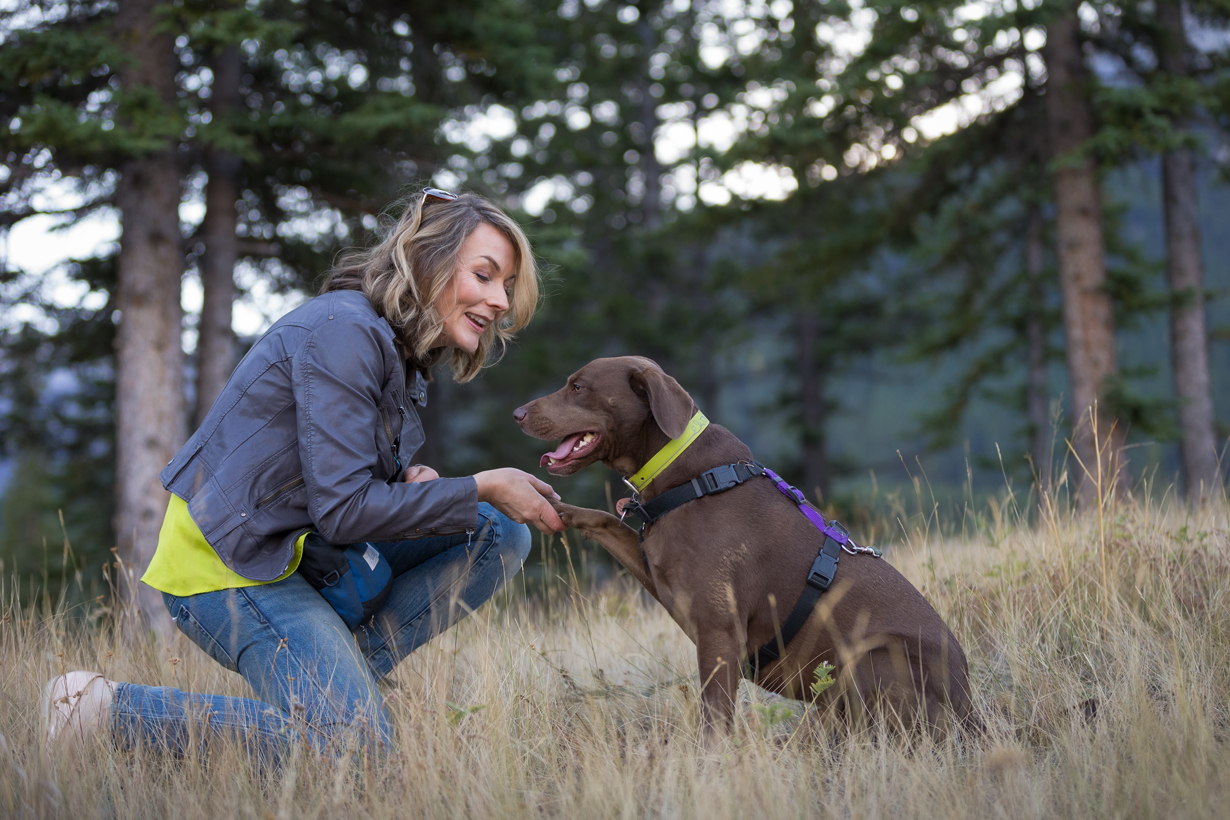
I’ve been there. My own dog, Percy, couldn’t be left alone. He’s the reason I do this work. And after 15 years of helping families through this — tens of thousands of them — I can tell you with confidence: it gets better. Not overnight. Not without effort. But it gets better.
You haven’t done anything wrong. Your dog isn’t broken. And you’re not alone in this.
— Julie