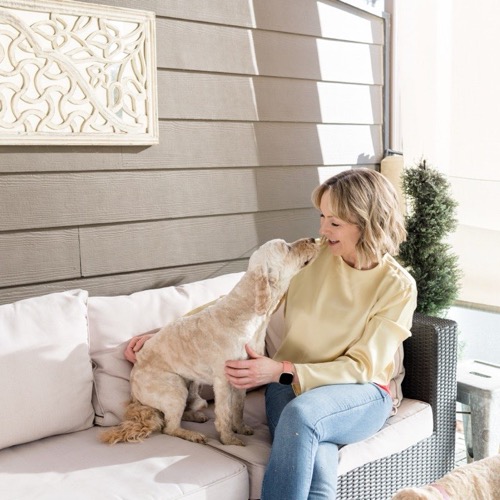
5 Steps To Helping Your New Rescue Get Over His Fear Of Being Alone
Show Notes
Is your rescue dog struggling every time you leave the house?
Or maybe he’s freaking when you leave the room!
If so, this episode is for you as I’m going to share my 5 recommended steps for getting a rescue dog over their fear of being alone in their new home.
Transcript
Download SRTWell, hello there and welcome to another episode of the Fixing Separation Anxiety Podcast.
I'm your host, Julie Naismith, and this week, well, if you have a dog who you've recently
adopted who you got from a shelter or a rescue or a foster organization, then you need to
tune in because if your rescue dog isn't settling in, is struggling when you leave, this episode
is for you.
I'm going to share my top five tips for helping your rescue dog get over his anxiety at being
left.
But before we dive in, let me tell you about my book, Be Right Back, because Be Right Back
is being bought by tons of owners and so many of them are getting results by following the
training that I outline in Be Right Back.
So if you haven't grabbed your copy yet, you need to do so.
Head over to Amazon, read the reviews, check them out because I think you're going to find
this book is just what you're looking for if you're struggling to know where to start
with training, how to craft a training plan, what to say to your friends and family who
think you're crazy for doing this.
So head over to Amazon where you can find Be Right Back, my brand new book.
So let's dive into this week's episode.
Hello and welcome to the Be Right Back Separation Anxiety podcast.
Hi, I'm Julie Naismith, dog trainer, author and full on separation anxiety geek.
I've helped thousands of dogs overcome separation anxiety with my books, my online programs,
my trainer certification and my Separation Anxiety Training app.
And this podcast is all about sharing my tips and tricks to help you teach your dog
how to be happy at home alone too.
So tell me, have you adopted a dog recently or maybe not so recently, only to find out
that they aren't settling in quite as you'd hoped, not quite as you'd imagined?
Well stay tuned because we're talking about how to get your rescue dog, how to get that
newly adopted dog of yours to be comfortable and happy home alone.
Okay, so let's talk about dogs with, adopted dogs who aren't quite settling in.
One thing I think that immediately springs to mind, if you have a dog that you've rescued
or adopted, you immediately come to the conclusion that, and then they're not settling in.
You immediately conclude, well maybe that's just a thing.
Maybe rescue dogs, adopted dogs are never going to settle in.
Maybe that's just more common for dogs with a history, an unknown history or a difficult
or problematic history to have separation anxiety.
So do rescued or adopted dogs have more of a tendency to have separation anxiety than
other dogs, dogs from a breeder for example?
There is some data which seems to suggest that if a dog has been adopted later in life,
they are more prone, a little bit more likely to have separation anxiety.
However, we need to unpick that and reflect, does that, does a dog get adopted or given
up or surrendered because they have separation anxiety and the owners can't cope?
Or was it the process of moving homes, of getting a new family, did that actually cause
the separation anxiety?
And it can be difficult to tell and here's why.
Okay, so back to that point, are dogs who have been adopted, do they have separation
anxiety, is that why they were relinquished or did the relinquishment cause the separation
anxiety?
If you think about dogs who are relinquished to a shelter, when an owner comes in they
will be asked, why are you relinquishing this dog?
Some surveys suggest that owners like to conceal the reason, other surveys suggest
that owners are fairly transparent, so it's kind of a bit mixed as to whether owners are
totally up front about their dog's condition or not and you can kind of see why if you
are relinquishing a dog, you might not be totally honest about your dog's condition,
but I'm not saying by any means that owners who relinquish their dog lie about their dogs
because often time with separation anxiety, what we see is that owners don't always know,
they haven't had the note from neighbours, they haven't been aware that their dog barking
all day is anything unusual, remember that not everybody works out that a dog who destroys
when they are at home has separation anxiety, so I'm sure there are dogs that are going
into shelters or going into a rescue organisation who have separation anxiety and the owners
just don't know about it.
There are probably some dogs going into a foster rescue or shelter who have separation
anxiety but the owners are being a bit cagey about it and then we may have dogs who do
become anxious at being left because of the change in situation, either kennel life has
stressed them out or just changing homes has caused stress, so changing homes can be a
big factor in a dog developing separation anxiety, so it's hard to say whether dogs
are much more prone if they've gone through that and what's causing it, is it cause or
is it effect, were they relinquished for their anxiety or did their relinquishment
cause anxiety, anyway it is what it is, if you have a dog you've adopted and it has separation
anxiety all of that kind of doesn't matter now because the dog is in front of you and
you're trying to work with the separation anxiety.
So let me talk about my top 5 tips, the first thing is don't panic, tip number 1, I know
it sounds obvious but don't panic just because in those first few nights or first few weeks
even your dog doesn't seem to be settling, it goes without saying and I know you know
this but this is a whole new different environment for your dog so it isn't really surprising
if your dog seems unsettled and weirded out, however there's also kind of a gut feel reaction
that I'm sure you've had where you think yeah but I feel like this is going on a bit too
long and that's when you then go to number 2, my tip number 2, so if you've got a dog
who doesn't seem to be settling and you are just starting to think no this seems like
it's not kind of just normal adjusting, so tip number 2, continue to give them time and
in that time don't let your dog, don't leave your dog to howl it out or bark it out or
chew it out thinking that it will resolve and your dog will settle in because all adopted
dogs eventually settle in, so if you have a suspicion that your dog isn't settling the
answer isn't to force your dog to settle by leaving them to get on with it, go gently
with them, test out some absences and just see how they deal, don't force them into long
absences that they are not yet comfortable with and then number 3, start some home alone
training, I would love it if with puppies, adopted dogs, any dog that's new to our home
we prioritise home alone training in the way that we prioritise house training, even with
5 year old rescued dogs who we've been told are completely house trained, we're all a
bit nervous when they first come home aren't we, we're all a bit, watch them, don't let
them out of our sight, let's make sure that they are truly house trained, so we don't
take house training for granted nor should we take home alone training for granted, dogs
are naturally social, they love being with us, most dogs are disappointed when we leave
if not anxious, so I really wish that on the list of things that we have to do when we
bring a dog home, I wish on that list we had home alone training and what does that look
like, it means gradually building up the time that your dog can handle, it means that first
day you get your dog you don't leave them for even half an hour, I probably would say
even less than that, test out, see if your dog's ok, leave them for seconds and then
minutes and then multiple minutes, go easy on them, gradually show them that this is
their new home, that you go and you come back and that it's safe and that they are here
and that they are going to settle and love it but don't take for granted that they are
going to be ok, teach them how to be home alone, then the fourth thing, although I said
start home alone training and don't expose them to too much alone time, don't throw them
in at the deep end, I do want you to balance time with them and time without them, one
thing that can definitely happen with newly adopted dogs is their world because it's been
turned upside down, their world is made better when they make a connection with one or two
really significant people, some dogs when they are new to a home will attach to one
or two people but really strongly, in not a very helpful way, in a way that actually
stops you feeling like you are ever going to be able to leave this dog, so I want you
to comfort the dog, be there for your newly adopted dog but don't do that at the expense
of other people getting involved, even if that's friends, even if that's day care or
dog walker, I don't want you to be the sole focus when you first adopt, now if you've
already gone through the issue of hyperattachment, your dog has latched on to you, you're the
only person that will do and it's very common to don't think you've done anything wrong,
I want you to focus on building out their circle of trust, so that's my tip number five,
use friends, family, dog walkers, day care people, get other people involved in fun and
care so that gradually your dog realises it's not all about you, get them comfortable with
a wider circle of people so that the pressure is off you and then when you are training
you know that all the other times that you're not training you can suspend absences and
your dog isn't going to be over threshold just because they're at day care, because
remember if they're really super attached to you, if they are not with you, they're
over threshold, so work on expanding their circle of trust so that when they're not with
you they're doing fine, now the key thing about all of this is time and patience, time
and patience, patience in the training, patience in the way you gradually teach them to be
home alone, time and patience and it's true for any issue that your newly adopted dog
might have, time and patience are going to be the key and remember if you're thinking
about getting an adopted dog, if you've just adopted a dog, lots of adopted dogs, probably
most adopted dogs settle happily in and never show any long-term signs of anxiety, so don't
panic, don't let this thought, the thought of a rescue dog with separation anxiety put
you off, do know that most dogs will eventually learn to settle in your new home and by the
way thank you for adopting and thank you for thinking of adopting.
Well that's it from me this week, thank you so much for listening, I know you have a ton
of options when it comes to listening, so I really, really appreciate you tuning in,
now if you're liking my podcast I would love it if you'd head over to the Apple Podcast
Store and rate and review the podcast, that would mean so much, meanwhile don't forget
to check out my book on Amazon, the book is Be Right Back or you can just go straight
to this link and I've linked to it in the show notes, mybook.to forward slash be right
back, that's mybook.to forward slash be right back, alright happy training and I look forward
to seeing you online somewhere soon.
Thank you so much for listening to this episode of the Be Right Back Separation Anxiety Podcast,
if you want to find out more about how I can help you further, head over to julienaysmith.com,
meanwhile if you enjoyed listening today I would love it if you would head over to wherever
you listen to your podcasts and consider rating my show, thanks so much, good luck with that
training and bye for now.
www.julienaysmith.com
Need help with separation anxiety?
Join the Be Right Back program and get the support you need.
Start helping your dog today