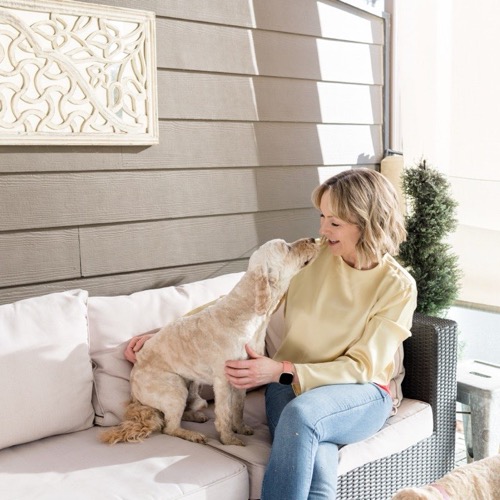
What to Do When Your Dog Can't Be Alone, But Is Dog and People Reactive Too – with Jennifer Pratt
Show Notes
Having a dog who can’t be left is hard enough. But for some dogs, being around strange people or dogs is also a challenge.
When this happens, it can feel like your options for managing alone-time are almost non-existent.
In this podcast episode, I’m thrilled to be speaking with Jennifer Pratt. Jennifer is expert in both separation anxiety AND dogs who are fearful and agressive when out in the world.
Jennifer shares her tips for working through this dilemma, using her insight not only from the many clients she’s helped, but also from the learning she gained with her own dog, Mary-Lou. If you’re feeling like there’s no hope for you and your dog, make sure you give this episode a listen!
Transcript
Download SRTIf you've got a dog you can't leave but your dog can't be around strange people either
They can't
Go to a daycare. They can't go to a dog sitter. And what about if it can't be around
other dogs or other people
How on earth do you manage absences them?
Well, if this is you and this sounds like your dog, I don't want you to lose hope
Because in this episode I'm talking to Jennifer Pratt
Jennifer's an expert in separation anxiety and in
dogs who are fearful or aggressive when they're out and about and Jennifer and I have a
fantastic conversation
About how you can help a dog who hates being alone, but can't be out in the world either
If you're feeling at all hopeless about this situation
Do tune in I think you're going to love what Jennifer has to say
Hello and welcome to the Be Right Back separation anxiety podcast
Hi, I'm Julie Naismith, dog trainer, author and full-on separation anxiety geek
I've helped thousands of dogs overcome separation anxiety with my book, my online programs, my trainer
Certification and my separation anxiety training app and this podcast is all about sharing my tips and tricks to help you
teach your dog how to be happy at home alone, too
Jen, I'm so excited about today's podcast and the reason I'm so excited is because, well, it's always fabulous talking to you
So very selfishly, I'm really going to enjoy this but I get asked about this topic so often
In fact, it came up as recently as a couple of days ago in my group and I got really excited and said
Well, just wait, we've got a podcast coming out about this. So we're going to talk about dogs who have this
dual challenge of, on the one hand, they can't be left because they've got separation anxiety
but on the other hand, they really struggle out in the world because they react to tons of things
And so that's what we're going to talk about today, right?
Yes, absolutely
And just, I mean, the word reactivity gets banded around all the time and it can mean different things to different people
So should we just talk about what we mean by reactivity for the purpose of today's conversation on this podcast?
Yeah, yeah
I honestly rarely use it with my clients because it is sort of such a muddy kind of word
But if I was asked what exactly does it mean, I would say that it's a dog that, when you're out and about or in your normal daily world
overreacts to a typical situation
that most other dogs, you know, they might notice them, they might be like, Ooh, what was that?
Taking it back, but they can bounce back from it quite easily and just take it in stride
Our dogs that are reactive, you know, it doesn't necessarily mean that they have any aggressive tendencies
It's just that they are kind of tighter wound, shall I say
Yeah
Yeah, and they just have a harder time coping
So a reactive dog could be a dog that does enjoy other dogs or people
But they get frustrated that they can't get to them as soon as they would like
But we could also have a dog that's being reactive because they're asking for space
And they're like, please don't come any closer
This is what I've learned helps to keep that distance
Yeah, and that could be distance from dogs, people, skateboards
Yeah
Anything really, right?
Absolutely, yeah
And I'm really glad you defined that word because I'm like you, I struggle with it
I struggle with it because it doesn't really describe anything
We can't use that word and then all describe the same thing
You know, you use that term, different people mean different things by it
So I'm really glad that you operationalize that for us and describe what it means when we call, use this very general term
So thank you for doing that
But, you know, we come across this a lot, don't we?
Because you work in separation anxiety all the time
And you work with dogs with, I love what you said, highly, highly wound, tightly wound
Tightly wound, yeah
So you work with these dogs all the time
And you just, every now and again, you get a dog that is so tightly wound
That they really can't cope with any dogs or any people
And basically, at the same time, can't be left
So let's talk about those challenges
When you're presented with that dog, how do you deal with that?
How do you approach that with guardians?
Yeah, so I was in the situation myself
So I found that when, my dog was fearful of unfamiliar people
She loved dogs, but fearful of unfamiliar people
And we had just moved to a new city
That was over an hour and a half away from our old one
And for me, she developed separation anxiety
And the most difficult thing to do was that absent suspension
It wasn't because I couldn't rearrange my schedule
Which I could do some of that
But I just, I could never leave the house
Because we didn't know anybody
And so she didn't have familiarity built up with anybody that she felt comfortable with
And I didn't feel comfortable even with just anybody either
So I found that for that, that was the most difficult part for me
But if you have a dog who's reactive
Maybe to dogs, but is dog social
You know, you might have a hard time finding somebody
Who can confidently take your dog for walks or outings
I might be not really comfortable taking them to doggy daycare
I mean, it's so hard because there's so many people who mean well
But just don't have the skills to help our dogs
Even in the management scenario aspect
Oh yeah, it's so tough
I've got one of each
Well, Percy used to have separation anxiety
But I was lucky because he was okay with other people
He's great with other dogs
But my other dog Tex has got all the other things
And I often think, oh my goodness
If Tex had separation anxiety
And I had to get people to come into the house maybe
You know, dog walkers to pick him up
Or he has to go into, I mean, he couldn't do daycare
He just couldn't do daycare
I just think, oh my goodness
I got lucky because I had the different problems in the different dogs
But you, no, you had both going on
But it's, you know, and we see this
It's not uncommon
So I just want to explain to people
Who maybe don't always follow the podcast
And are maybe tuning in
Because again, talking about this topic of reactivity
And people are getting very excited about that
I want to explain absence suspension
So, do you know what?
Why don't I get you to explain what absence suspension is?
Because you're the separation anxiety expert too
Yeah, so absence suspension is a very important part
Of working with our dogs with separation anxiety related behaviors
Because that is the thing that is making them panic
So that means that we have to stop leaving them alone
For longer than they can handle
And for most people
When they reach out to a separation anxiety specialist
It's usually pretty zero, right?
Some dogs have worked up to a certain amount of duration
Maybe like two minutes or something like that
But not very long
Usually before they start to panic
So really you have to stop putting your dog in that situation
That's causing them to panic
If you want them to start feeling safe about it
Yeah, I'm glad that you did that explanation
Because people are used to the way I explain it
And it's always nice to hear the same concept
Explained in a slightly different way
So thank you for that
Yeah, so of course when we start working with dogs with separation anxiety
We're all about, yes, okay
So now you need to stop leaving your dog
And here's how you might do it
And I know it's going to be awful
But we go try and encourage people
And make them feel like it's doable
And then we're suggesting all these things
When you have a dog that doesn't get on with dogs
Or people are looking at us going
How am I going to do that with my dog?
You're crazy, that's not happening
So I'm really curious
What did you do with your dog?
Because you had to do this
You had to leave the house at some point
So how did you eventually manage to get her to be okay
With at least some other situation?
Yeah, so I did a lot of things wrong
It was before I'd read a book
And I was trying things
Jen, we're either winning or we're learning
Right
You didn't get it wrong, you were learning
Absolutely, I tried situational meds for her
And on the third time she was like
I know what this means
And she would immediately start to panic
As soon as she started to feel kind of ugly
So basically I just
I was lucky in that
I could go down to basically
Working almost not at all
In order to suspend absences
While my partner was working full time
And then I would wait for him to get home
Before I would go out and take clients
So I was very fortunate
It still was not easy, absolutely
But yeah, that's how I got through it
It was sheer luck, honestly
Well and it's interesting because I know that
Sometimes people will say
A dog with separation anxiety
Would be so much better with
This family setup or this household setup
But as I remind people, even though
In your situation you were able to flex things
You still have medical appointments
You still want to go out to dinner every now and again
With your other half, not doing shifts
You go to dinner, they go to dinner
So there's always times where
It just comes to the point where you want to do stuff together
You can't 24-7 manage
One being at home and the other being out all the time, right?
Right, and for us being in a new town
Like a new city, we wanted to try and make friends
But we couldn't have friends over
And we couldn't leave
So it was, yeah
It was like that huge double-edged sword
So yeah, it was tough
But then presumably you
I know you said you did a lot of things wrong
Well actually, yeah, share some of those
Because I always think it's helpful for people to know that
Even brilliant trainers like you
You know, sometimes way back when you didn't know
When you weren't necessarily the brilliant trainers that you are now
Because we all start somewhere
I think it's comforting for people to know that
We're not perfect either
We definitely make mistakes
Or not mistakes, we're learning
Learning experiences, absolutely
And it doesn't feel like that at the time
What were a couple of things you look back on and go
I wish I'd done that differently
Well, I tried the whole music thing
So I tried turning on music and then leaving
And it was really nice
Soothing through the dog's ear
I read the book
And I was like, okay, this is going to help
Nope, it became a departure cue
She learned that that meant I was leaving
So then I started
Then I tried the meds, which didn't help
Then I started trying to work on creating her
With me doing small, tiny, tiny, tiny
Absences out into the hallway or whatnot
And I had to start there because we had four dogs at the time
And one of them had seizures
So it was very complicated
How we had to have them all separated just in case
So I didn't have the option of not having her confined in some way
That didn't work
As soon as I would close the door
She would start to get upset
And this is a dog who got so upset by the crate
That on the day we were moving from our former home to our new one
She broke three of her teeth getting out of the crate
So I knew that I could not push that at all
Because she is definitely a dog that would do anything
Including severely harming herself
So then I tried a gate across the door
That didn't work
And then I almost gave up
I was like, I don't know what to do
And this was in the age where working from home was really not a thing
Just not a thing, no, exactly
I remember
No, I was just going to say that you were reeling off all the things
And I was there too, all the things
And I look back now and I'm horrified at all the things I tried
Why did I ever think they would work?
Well, because people would tell us that they worked
10, 12 years ago
Well, people still recommend some of these things
But yeah, we didn't know any different, right?
Some things got to work eventually, surely
Yeah, yeah
And before she had separation anxiety
When she just had the, I say just, like it's little
When she was just, I don't know
Had the fear and aggression responses from people
I was really resistant to meds
Any sort of formal meds
So I tried like every herbal supplement thing possible
Like things that would take like a month of you sprinkling on their food
And I finally broke down and was like
Apparently this is my problem thing
I need to get over it and get my dog some help
So that helped me in the long run with the separation anxiety
Because we did get to a point where she was good for about like an hour
And then she couldn't get past that stage
So we had to kind of start experimenting with medications
To add to her current, her daily dosage of anti-anxiety meds
To help us get past that hump
And that would have been much longer
If I hadn't already been open to meds
And seen what a benefit they were
Yeah, like me
We get there eventually, just kind of in hindsight
Wish it hadn't taken so long
And now we're both massive advocates
Because we've been through that process
We want to save people the time
One of the things that comes up
Well, it just comes up all the time
With people I work with
Is when they have a dog who
Doesn't want to be with them
Or daycare is no longer an option
When they have a dog like that
They want to work on those issues
I mean, they want to work on those issues
Regardless of whether their dog's got separation anxiety
They want a dog who can be sociable
With other people and other dogs
But now they've got this big bucket of problems
Of a dog who doesn't like a bunch of stuff
And then also doesn't like being alone
And there's only limited time and limited headspace
I would say, in any week
To do this kind of training
Especially when you've got all the other things
Going on with your dog
So how do you think people should
Prioritise their training time?
All these things that they potentially
Would want to work on
Separation anxiety, a dog who can't be left
With anybody else
So how do they decide where to invest
Their training hours?
Yeah, so I always
Have a conversation with my clients
To say, you know
Where are they now?
Do they have anybody
That their dog does feel comfortable with?
Many people have a friend
Or family members
They're like, oh yeah, my dog frequently
Goes to my mom's house
Or my dog loves my friend
So-and-so because she met her
When I first adopted her
So some people do have
Some avenues there
So I'll say, okay
How close are they?
Would you be able
Or comfortable approaching them
About this with the caveat
That this is not forever
And I will, I say
Pay them in wine or chocolate
Do something
As a thank you
Try to figure out where
Basically how their village
Is set up
Do they have enough resources there
To start separation anxiety training?
If they do
Then I say, okay, now you've got the option
Of starting with your separation
Anxiety training
Or if you want to grow that village
Or you feel that it is
Something that is impacting your life
Daily, the fear
Aggression or reactivity
Then we could start there too
So I will say
You've got options here
But we have to figure out
Management for one of them
Yes, exactly
Because you can't
Both of them require
Management
And depending
One of the things I say to people
What's affecting your life most?
And I do
Try to talk people back
From trying to do all the things
I don't know about you, but I just find that
It gets completely overwhelming then
If they're trying to do
Work on all of the issues all of the time
Yep, yep, absolutely
I'm big into prioritizing
And saying, hey
I know you want to do it all, but let's do this
For X amount of duration
Like a month
And if you're starting to feel like, hey
I've got my head wrapped around
How to help my dog feel better
About this person I'm adding to our village
Now I'm feeling confident
Like I can take on
The separation anxiety training
On top of, while I'm continuing
To get my dog comfortable with this person
I really encourage them to do that
Just because it is a lot
For anybody
I mean, your separation anxiety
Training is, you know, daily
Yes
We do encourage, of course, days off, but
It doesn't seem like it's going to be
That much until you start doing it
You're like, oh my god
I have to do my session
Yeah
And I always say, you know what
It's fine
Not to love doing separation anxiety training
And then somebody will always pop up and say
Actually, I really do like it
But, you know, I remind people, it's fine
Rarely do we get up in the morning and say
I can't wait to do my debauch training today
It's not like tricks
It's not like going to agility with your dog
You know, it's
It's worthy, but it's not necessarily the most
Fun training we will ever do with our dogs
And that's okay, it's okay that people
Don't love it, but just do it because they know
It's the right thing to do
I'm always conscious of not overwhelming them with
You know, more stuff, although
Can we talk a little bit about
You know, we could do a whole other podcast series
Quite frankly on how we help fearful dogs
Overcome other issues, but
When you're talking about
Say, for example, with trying to get
A dog to love more people
Or love that person
That they're kind of okay with a bit more
We use food, right
So it's not like separation anxiety training where we're like
No, no food, no food
But it's good to suggest that people use food, aren't you
Yes, absolutely
And really fabulous food
So I was
No store-bought treat is going to be enough
We want, I was thinking
My first one, spam
I use spam all the time
Cheese too, I didn't know that
I love spam
So much easier to cut off than hot dogs
Of course, yeah
So, like, that usually
People are like, whoa, really
And we want to keep it special
So, you know, most people have already used peanut butter
Or something like that with their dog
But we want to really up the ante
So that when they
First see this person
He's like, whoo, I get spam
Spam rains from the sky
When I see these people I'm not familiar with
I kind of want to see them more
So that's what
We're looking for, is to change
How our dogs feel
But we don't, just like
With separation anxiety we have to go at their pace
So
We most definitely will use food
You're not going to change how a dog feels
About something with
Pats on the head or happy talk
And it's not rushing up
To people and saying
Hey, this person's great, you're going to get spam
So there's still the same element
Of desensitization in there as well
Which is the going at the dog's pace
Isn't it?
Exactly, yeah
There's so many things to take into consideration
With a person
That people might not think about at first
Because they will commonly reach out to me
And say, hey, my dog's
Randomly reactive
I have no idea what they're responding to
Why are they like some people and not others?
Why can we walk past one person
And we're on the same side of the sidewalk
And like a foot away
Where there's a person across the street
And my dog is barking
And lunging at them
So we really have to break it down
So that they can start to understand
The different things that our dogs are noticing
Our body language
How fast that person is
Coming towards them
What exactly are they doing
Angle of approach
Are they coming head on versus from the side
There's so many different things
There that our dogs are observing
And saying, hey, is this person going to try
And say hi to me or not
Am I going to be put in this situation again
Or that
So really helping them to learn body language
It's such a good point as well
Because even when we spot those trends
And we discover that
A person across the road
For whatever reason
Is more threatening than a person just passing by
Could happen
And people go, I don't understand
I don't understand why that is
It seems to be the case
It's definitely a trend here
A dog has decided it doesn't like that thing
But it likes this thing
And so what we're going to do, we're going to work on the thing it doesn't like
It doesn't always add up to us
When we work these things out
We go, oh wow, it seems to be when he
Oh wow, why would he be like that
He's decided that's scary for him
Exactly
Scary for them, and that's all that matters
Yeah, yeah
We can cry ourselves in knots
Because it doesn't seem logical
The example that we often talk about
People change garments, right
So they put hats on or they'll put a different coat on
Same person with a hat to us
Is the same person
But to some dogs, completely different beast
Man with a hat, completely different to the man without a hat
Yeah
They just look at the world differently from us
Yeah, and they're so smart
I had one client whose dog
Would know when people
Were looking at their phone
So if they were looking at their phone
And walking past
It was totally fine
If they didn't have their phone
That was a bit more of an uh-oh
Like I hope they don't make eye contact
We have to get distance, ASAP
All kinds of things
But if that phone was up, the dog was like
Cool, I got it
Oh wow, that is so fascinating
Because your dog presumably is assuming
Or has learned
That when people have a phone
They don't interact with the dog
The strange dog
The more you have the phone, the more likely to come over and say
I'm great with dogs
I'm so good with dogs
In fact
It's funny you say that because
One of my dogs reacts to people who say things like that
They react to the
I'm good with dogs people
Uh-huh
Oh no
In their face
The people are right in the dog's face
Yeah, I'm really good with dogs
Yeah, so prioritizing
Yeah, I love that you say that
So prioritize because it's going to
You want to think through how is this going to impact
You know, most impact my life
Where
And sometimes it's a practical thing isn't it
Where can I
Maybe I'm not ready to do separation anxiety training yet
Because I don't know
My other half's not on board
But he is on board for doing some of the fear training
So maybe we'll start there too
So there's logistics, there's practicality
But prioritizing is the key, right
Rather than trying to do all the things
Yeah, absolutely
Can we just talk a bit more about your
Concept of building
A village
We talk about it quite a bit with separation anxiety
But it's interesting that you also talk about that
For dogs who are
Kind of a bit scared of the world
So tell me a bit more about building a village for these dogs
So I always think of it like
Our dogs have
That are fearful of people
They have, or heck, even other dogs
I mean, we build their village too
Is that
They don't have a whole lot of
Associations
Or in their good bucket
I guess with people
And if we're trying to
Introduce lots of new people
Constantly to our dog
I can feel like it just gets to be too much
You know, even if they're doing the exact
Same thing on the protocol that I've given them
Like, you know, do this, do that
Have your helper do this
There's so many other potential things that could be going on
That that person could be doing
Or that your dog's not comfortable with
That I'm just like, hey, let's start with one person
We're going to focus on that person
And I always encourage people
Find somebody
Who takes direction well
Is going to be comfortable with your dog
That is willing
To do this more than once
You know, so
We really, like, get kind of picky with who we pick
So that it can be the easiest
Possible setup for our dog
Because for most people, the goal is
To be able to get somebody
Inside their house
That they can hang out with
And that they can relax with
So if we can say
Hey, we're going to add
We're going to add Victoria
To your village
She's a great one, she's my training partner
And she
She knows
You know, all the stuff that people do
That could possibly make
A dog uncomfortable
So she is really great at being
Like the second stranger
That we've added to the village of a dog
Because I will have given
Clients a lot of guidance
On body language, how and why
I'm making decisions with
If I'm going to push on to another step or not
And then I'll say, okay
Victoria's going to be
You guys are going to practice your skill set
It's weird asking a friend
Hey, can you stand up for three seconds
And then sit down again
Can you do this, and blah blah
So they get good at coaching
Their helpers by being able to coach
Somebody
Who, if the scenario
Was maybe like, I don't think
Their dog's ready for that
She'll tell them
Hey, why would
You make that decision
And maybe we should do this
Or maybe we should do that
And she also is very good
At keeping
An eye on the dog's body
Language
At the same time in coaching them
And that takes practice because
The dog can't feel like you're staring
At them and being all weird
I tell you what
Hats off to, I say this a lot
Because I only work with separation
Anxiety, you know, we've got
The luxury, as you know
When you're working separation anxiety cases
We've got the luxury of video
We've got the luxury of replays
We've got the luxury of coaching while not being in the room
With the person and the dog
And I always think, how do you guys
Do it when you've got, you know
Dog and person
And you're trying to coach
And watch body language and you're not
Watching it on video, it's all live
And like, whoa, it's amazing how you do it
Yeah
Well, honestly
I could take one positive thing
Out of the
Pandemic, which obviously was
Horrible, was that
It got people more familiar with
Technology and
I now no longer
Have to walk into a house
Clueless, I mean
People would fill out their intake forms
You know, and I can read a lot
From the intake forms, but
I don't have to do as much
Training on the fly
While watching body language
And talking to people and explaining things
I can do all of that
Set up initially
Online, where we go over
What's going on, what have they observed
Things like
Going over body language, watching videos
Together, letting them know
What exactly to expect when I get there
And what to do
So, that just
It's, oh, I love it
It's just so much easier on me
And on the
Guardians, because they're able to start
Practicing some stuff right away
And they can feel more confident and not so nervous
Having someone come into their home
And also
We say this all the time
When people ask us why we do separation anxiety
Remotely, well
We don't need to be an added
Unnatural factor, unnatural
Parameter in the room with the dog
And for a dog who's
Scared of people
That can be a big deal when the trainer
Comes round too, so I guess what you're saying is
You can manage that
Much more effectively because you can have a conversation
Beforehand and then maybe you can
Chat about whether
Now is even the right time for you to come round
Maybe they do some work
First and then you come round
Or I guess at least when you come round
Everybody knows what to expect
You've got a drill, you go into that
So I love that, do you find that you're doing
More of that, kind of setting up beforehand
Before you go round?
Yeah, I actually made it mandatory
I loved it so much, I'm just like
This is just the way it is now
I like it, I just feel
I just feel much better
About this situation too
Because I have
Knock on wood, always
Been safe, nothing bad has happened
But there are some
Circumstances where you feel a little
Unnerved and yeah
I prefer to not have those
Happen in my life
And it's really old school as well, isn't it?
To think that we can't help a fearful dog
Without seeing it panicking
Reacting, going over threshold
We don't want to be part of the problem
So we don't need to go into a house
And prompt a dog into a fearful reaction
So that we can
Work with that dog, we don't need that
Information, do we?
And I also feel that
Using technology straight off the bat
Common technology
That most people are used to using by now
It also opens up
So that
They are also
More willing to do things
Such as take videos and send them to me
Between our sessions
That used to be a little difficult
Even though we all have phones
That we're constantly using
To take photos and videos
But taking photos or videos of them training
With their dog seemed to be difficult
But it's not anymore
And it's just so wonderful
Being able to see them in action
Because there's so many times
Where I can just watch the video
Take 10 minutes
And record another little video
That says, hey, this is what I'm observing
With your dog's body language
Your timing mechanics were a little bit
Too fast there, let's do this
And change it up, and boom
Rather than them having to invest
In another full hour session with me
It was 10 minutes
So I want to help people
Help themselves
As much as I can
Which probably is not a good business model
But I want them to succeed
It is like separation anxiety
In that there's a lot of repetition required
A lot of repeating
Repeat, repeat, repeat
So you can't
You can't do that
Because no dog would ever
Get enough of the
Right exposure
Over the frequency of that
I just have to throw into the mix as well
The method that Jen's talking about
We both went to the Academy for Dog Trainers
So we both learned from the best
How to deal with fearful and aggressive dogs
And I've been using this
Counter-conditioning for years
With my dog Tex
And many years ago he was a dog
That wasn't comfortable with strangers
He's now a dog that I
Happily and readily leave
With house sitters
Who he's met once
In fact, a couple of years ago
We had a house sitter
She was a trainer friend
So I felt really secure with that
But he'd never met her
But I still felt really comfortable
With her opening the door
Calling his name
And him going, yay!
I love it when strange people come into the house
And it always rains amazing treats
Because the first thing I say to anybody coming into the house
Is just, just give him it all
He doesn't have to do anything
You're just going to be the person
You're going to be the treat dispenser
Just go for it
And people always give tiny, tiny little bits
I'm like, no, no, no, go crazy!
I wanted to say empty
Come back to a slightly fatter dog
And then you get the
You know, we get these treats that come in
Beast sticks, like 10 centimetre sticks
And some people literally take my word
And I come back and he's had a bag of those a day
I'm like, okay, fine, no wonder he loves you
But that's okay
Rather than
But it's transformational
And now when he sees strange people in the street
In fact, the first thing he does
Is he looks at me and goes, hang on a minute
Hang on, I get a treat when I see these people
What are you doing, lady?
It's magical when it works
It's magical, isn't it?
Yeah, absolutely
I was just going to say
It's one of the reasons
Why I focus on what I do
Mary Lou
Who was the one who had separation anxiety
And had the fear of strangers
It was such a struggle
But once I found
The Academy for Dog Trainers
And truly learned
How dogs learn
It was a game changer
Absolute game changer
And I was just like, wow
We can help
These people like me and Mary Lou
And I just couldn't wait to start
Helping other people
And it's just so important
Actually understanding
How dogs learn
There's so much stuff out there
That's just opinion
Based off of
Myth after myth after myth
But if you don't know how they learn
And are able to apply it
You're not going to get anywhere
And apply it correctly as well
Because, you know, again
As with separation anxiety training
We often hear, well, I tried that, it didn't work
Trainers might say
No, that doesn't work
Because I've tried that
With my clients and it doesn't work
Well, yeah, but have you?
So that's one of the things
That I know that when people
Hopefully when they start working with us
They say, yeah, you know what, you gave it your best shot
But here's what you could do differently
That's going to be the thing
That's going to help you
So there's doing it and there's doing it right
And I'm not trying to sound like
Oh, we're so wise
And we know it all
But there is that factor
You have to do these things right
That process we talk about where a dog sees something
And then amazing spam happens
I love that
There's more to it than I've just described
Your coaching is just invaluable
In that situation
Absolutely
You can't get them close enough
It has to be done properly
Like you said
We're not trying to say
Hey, we know it all
But we know our foundations
Rock solid, man
Those are drilled into us
And there's a reason for it
We use them every day
Yeah, it becomes such a habit
So
Mary Lou
My dog Tex, who didn't have separation anxiety
But I say he's pretty much got all the other things
He also has multiple issues
One thing that comes up a lot
My clients ask me
Frequently is
Do you think these are correlated?
So do you think that Mary Lou
Had separation anxiety because
She was anxious about other things
So one triggered the other
And I'm not expecting you to answer
Just for Mary Lou
But I just wonder if you have any thoughts on
Are these things correlated?
Dogs get separation anxiety
And they might be fearful of
Men with hats
But it doesn't necessarily mean if your dog's scared of men with hats
They'll get separation anxiety
So what are your thoughts on that?
Yeah
Not for one second thought that it was
Related for her
And I guess part of me
Was the reason why right away
Being a younger in school
Trainer at that time was
I knew how kind of
Sensitive or tightly wound she was
In general about life
So it wasn't just
Strangers, it would be like the smoke detector
Battery would beep and
She would become upset
A hot mess hiding in the bathroom
So
I don't think that they were related
At all
And she also
I was managing her stress
Like a helicopter mom
Like crazy
So she wasn't going through
Stressful situations on the regular
Once I figured it out
Yeah
I mean there are commonalities
With our dogs that have
Separation anxiety
Routine changes
Are a big one
We also seem to be
Finding that a lot of it seems to be
Genetically related
But I don't
It's not a slippery slope that
If your dog is
Uncomfortable with one thing then they're uncomfortable
With another, you're just waiting for the
Shoe to drop on the next one
I don't believe
That they're connected like that
I think the main thing
Is
Making sure that our dogs
Aren't daily being put
Into stressful
Or anxious situations
I feel like that
Can lead, kind of compound
Itself onto
Increased behaviour issues
As well as health issues
Yeah
Well that's a real biggie isn't it
The impact of ongoing stress
On health is really well
Documented for people now
So we're pretty
I think it's a pretty reasonable
Conclusion to say that
Dogs must be affected in a very similar way
So yeah, that whole thing about
Let's do what we can to
Reduce the fear and the stress
And anxiety in their world
That's going to be good for whatever behaviour problem
You're dealing with, it just makes sense
Yeah and I do wonder about
My dog Tex and all his things
I think, like you say, some of them
Have some commonalities
Like maybe a startle thing
Or a surprise thing
And then some of them are just like
He's not lucky and he
Doesn't like this and he doesn't like that
But they're not necessarily related
And then also, even if they were
We're not going to do anything differently
Yep, exactly
We're still going to address the same
Yeah, exactly
We can spend a lot of time
Thinking about the whys and the wherefores
If that changes how we do things
That matters
If it doesn't change how we do things
Let's just get on with what we know
Start helping them with relief
And the guardians with relief, obviously
As soon as possible
Absolutely
And so, loving this conversation
But yeah, let's finish with some
If that's okay
Some final tips and advice
For guardians dealing with this kind of
Duality of problems
So my final advice would be
To really
As we were talking earlier
Create that priority list
What is going to give
Me the most relief
Right now so that I can continue
To help my dog
It's very easy to feel
Overwhelmed and if you
Try and do it all at once
Your head's going to be spinning
And then you're going to feel like you're not
Making progress anywhere
So, prioritize
Heck, make a checklist
I'm a big list person
As I'm sure
Many people who know me well will tell you
That I, you know
I'm like, okay, I'm going to do this first
And then once I do this and I get that done
To my satisfaction, I'm going to move on to the next thing
So, really
Prioritizing so that you
Can have the energy
To continue
To help your dog
Oh, that's fantastic
Yeah, that's a really good positive
Note to end on
And so, Jennifer
People want to reach out to you
To work with you, either for separation
Anxiety or for
Fear-based issues
That we might umbrella call reactivity
But, you know, we know much more
How can they get in touch with you?
Yeah, so
Our website is
Wag the Dog and Company
All spelled out
And we'll work with anybody
On any different type of case, but we do
Specifically specialize in fear, anxiety
And aggression
And to that, I know that
Not everybody is able to
Afford private
One-on-one training
And something that both Victoria and I feel deeply about
So, we created a
Membership
That's actually a monthly membership
Called the Introverted Dog
We felt that that most
Encompassed all the possible
Issues that dogs that are fearful
Reactive or aggressive
Towards people, and it could be unfamiliar
And familiar people
It's a monthly
Membership where we take on
Different topics every week
Or we build on topics
So you can learn how
To help your dog
And slowly
Yeah, I love it, that sounds great
And particularly if people from my membership
Are listening, they'll be so
On board for that, because I think people recognize
That, you know, this
You just need that ongoing support
It's really hard to do this on your own
And you don't have to do it on your own
So, what I'm going to do is
I will link to your website, and we'll link to the
Introverted Dog as well in the show notes
And you're also pretty
You do some pretty cool stuff on
Instagram, so we'll link to your Instagram
And other social accounts, so if people want to reach out
To Jen and team, then
Feel free to check her out in the show notes
Super, thank you
Thank you so much for your time today
This has just been, I've loved it
And I know it's going to be so invaluable
To listeners, so thank you, thank you
Thank you for reaching out
And I hope that your listeners
Find this helpful for next steps
On how they can help their fearful dog
They absolutely will, thank you again
Thank you so much for listening
To this episode of the Be Right Back
Separation Anxiety Podcast
If you want to find out more
About how I can help you further
Head over to julienaysmith.com
Meanwhile, if you
Enjoyed listening today, I would
Love it if you would head over to
Wherever you listen to your podcast
And consider rating my show
Thanks so much
Good luck with that training, and bye for now
Be Right Back
Need help with separation anxiety?
Join the Be Right Back program and get the support you need.
Start helping your dog today